

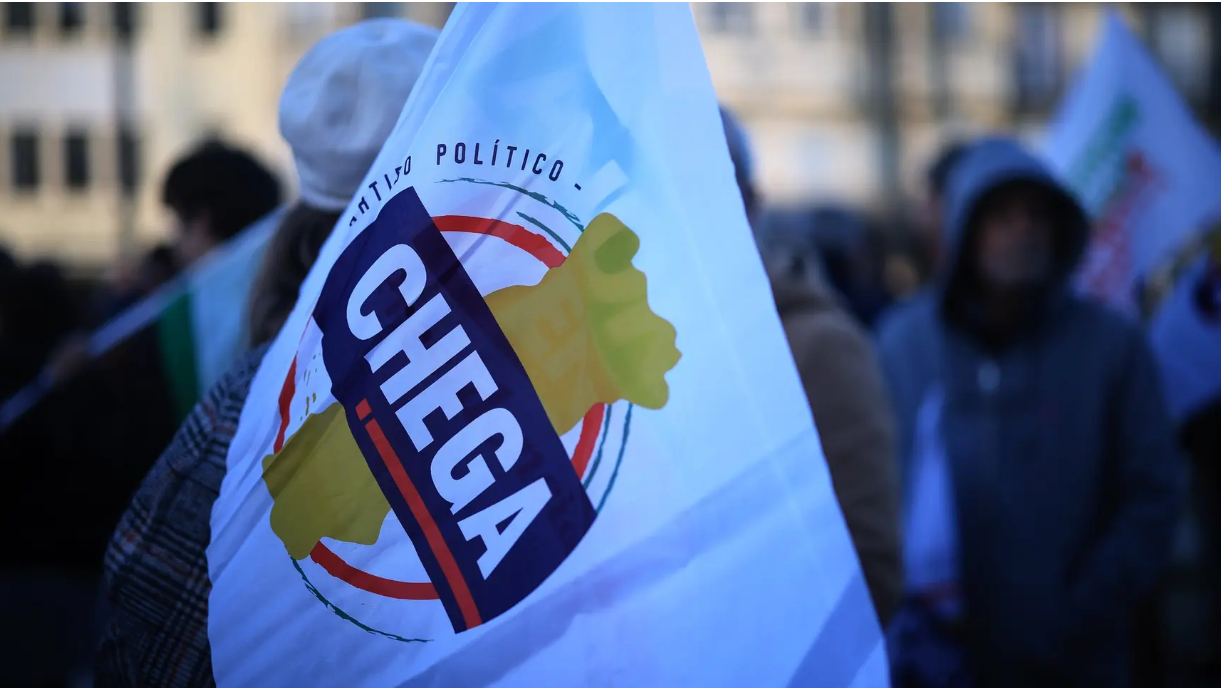
The same survey shows that PSD supporters give Chega an average score of 2.8 on a scale of 0 to 10, a value lower than that attributed to the PS party.
Compared with the parties further to the left on the political spectrum, the difference with Chega is small. PSD supporters give the communist coalition CDU and the Bloco de Esquerda a score of 2.9, while Livre receives 3.7 out of 10.
Currently, Luís Montenegro has pointed not only to Chega, but also to the PS, as possible parliamentary negotiation partners; however, this comparison is not reflected in the survey results when PSD voters are asked.
Central bloc union
For socialists, that is, PS supporters, the best-rated party is the PSD, despite having an average score of 3.9 points. The results contrast with those of the previous coalition among PS, CDU and Bloco de Esquerda. The members of the former "geringonça" receive a worse evaluation from the socialists, who assign 3.7 points to each party. For PAN and Livre, the socialists also assign 3.7 points.
Right evaluates right
Among PSD supporters, another data point deserves to be highlighted. Although the CDS-PP party was part of the winning coalition in the last legislative elections, the party received a worse evaluation than Iniciativa Liberal (IL). The Social Democrats assigned CDS 4.7 points, while IL received 4.9 points.
Chega evaluates
While PSD supporters rate Chega negatively, this antipathy is not mutual. Supporters of Chega give the PSD the highest score, besides their own party, with 3.8 points. In turn, the IL receives 3.6 points, the PS 3, and the Bloco de Esquerda and the CDU 2.5.
The survey also assesses how supporters view their favourite party. In the case of Chega, its supporters rate their party the highest, giving it 8.1 points out of 10. The rating is higher than the internal opinion of the PSD and the PS.
Chega as a moral or real threat
The Expresso study asked respondents to describe each party with a seat in parliament, revealing clear differences in how political forms are perceived.
Chega is the party that stands out most negatively, being described most often through negative words or expressions. Among the responses presented, 46% gave the party a negative rating. In addition, 40% of Portuguese people characterise the party supporters as a real or moral threat.
In the survey, respondents describe Chega supporters as "fanatics," "fascists," and "racists." They also refer to party members as "corrupt," "thieves," "liars," "stupid," or "dumb."
However, it is not only Chega that is characterised as extremist; the PCP also receives this assessment, with 6% of respondents describing the communists as an "extremist threat." In total, the PCP receives 25% negative ratings, followed by PSD and PS, each with 23%.
Moral disqualification
Supporters of the two largest parties, PS and PSD, also received negative ratings, cited by 11% and 12% of respondents, respectively. 18% of respondents assigned neutral ratings to the two parties, whereas only 4% did so for Chega.
However, Chega supporters were the ones who most frequently used negative words to refer to supporters of other parties. 28% of Chega supporters' descriptions of other parties' supporters were negative.
Political polarization
The research thus reinforces an interpretation of political polarisation, but with important nuances. PSD supporters do not see Chega as a natural partner when evaluating parties on a proximity scale; socialist supporters continue to give the PSD the best rating outside their political field; and Chega appears to be the party whose supporters are most frequently associated with negative perceptions.
Socialists continue to believe that the PSD is the best party outside their political spectrum and that Chega supporters are generally perceived negatively.








 English
 Nederlands
 Deutsch
 Français
 Español
 Italiano
 Svenska
 Pусский
 中文
中文 Türkçe
 Português
 Polski
 عربي
عربي Suomi
Suomi עִברִית
 Português (Brasil)
Of course they perceive Chega voters as a threat. Any political persuasion that espouses freedom, low taxes, less EU intrusion, less economic and civil regulation, more national and individual sovereignty as a threat to their love of an autocratic state apparatus that does their exclusive bidding.
By Tony from USA on 05 Jun 2026, 22:02
Only 40%? Wow.
Anyone with his eyes open knows they're a threat. All you have to do is read their billboards. (You should also keep a very close eye out for your bags on the airport carousel, and keep oyur children away from them...)
By Shawn from Lisbon on 07 Jun 2026, 16:17