


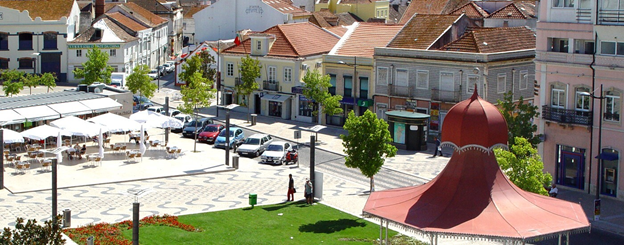
For more than a decade, Lisbon has been the star of Portuguese real estate. International headlines brought waves of tourists, Golden Visa investors, retirees and digital nomads, drawn by the high quality of life, climate, and affordability. Neighbourhoods were transformed, prices climbed, and demand from all corners of the world showed little sign of slowing.
It was, by any measure, a remarkable run. Today, however, there is a new chapter that's been unfolding.
When Success Creates Its Own Constraints
The forces that made central Lisbon so compelling have gradually made it harder to work with. Land within the city is scarce. Planning processes are lengthy. Construction costs have risen significantly. Prices now average around €6,000 per square metre in prime areas, and for Portuguese families looking for a modern home in their own capital, the numbers have become genuinely difficult. And for many of our investors looking to start their portfolios in Portugal, the yields in the city center are outpaced by emerging neighborhoods.
This imbalance has naturally redirected demand, and it is creating interesting investment dynamics.
Lisbon's surrounding area offers something that the city centre can no longer provide at scale: land reserves, larger plots, urban planning flexibility and the possibility to create modern residential communities designed for contemporary lifestyles.
At Maven, we began advising clients to look beyond central Lisbon more than five years ago, well before this shift entered the mainstream conversation. Today that strategy is proving out across multiple projects and locations.
Beyond the Centre
The term “suburbs” does not fully capture what is happening. These are not peripheral dormant towns disconnected from the capital. On the contrary, the municipalities south and east of Lisbon are increasingly dynamic urban centres in their own right, integrated into the metropolitan ecosystem.
From Almada and Seixal along the southern bank of the Tagus River, to Barreiro, Montijo, Alcochete and Moita further east, these locations combine proximity with quality of life.
Travel times are competitive. From many of these areas, Lisbon city centre is accessible within 20 to 35 minutes, depending on the connection (bridge, ferry or motorway). At the same time, residents benefit from less traffic congestion, lower noise levels, improved air quality and easier parking – factors that matter deeply to families.
Access to beaches is another key driver. For many Portuguese buyers, proximity to the Costa da Caparica coastline is a decisive lifestyle advantage. Living in Almada or nearby municipalities allows residents to reach expansive Atlantic beaches in 10 to 20 minutes. This blend of urban convenience and coastal access is difficult to replicate within Lisbon itself.
In addition, these areas offer green spaces, new schools, local commerce and community infrastructure that appeal to both Portuguese and international residents seeking a balanced life.
Strong and Diverse Demand
Demand here is coming from several directions at once, which is what makes the investment case resilient.
Portuguese citizens relocating from smaller towns and rural regions continue moving toward Lisbon for work and opportunity. As central housing becomes less accessible, surrounding municipalities become the natural landing point. International buyers from the United States, Brazil, France and the UK are also looking beyond the historic centre, seeking modern homes with parking, terraces and proximity to nature while staying within reach of the capital. Many are not looking for a historic apartment in Alfama. They want a well-designed, functional home that fits the way they actually live.
Investors, meanwhile, are following the yield. Rental returns in central Lisbon have been compressed by high acquisition prices. Well-located metropolitan projects still offer solid entry points and strong long-term rental potential, particularly for residential leasing where demand from the relocating population remains deep and consistent.
Owner-occupiers and investors converging on the same locations at the same time tends to be a reliable signal worth paying attention to.
A New Wave of Development
Over the past few years, the volume and quality of real estate development across the metropolitan area has changed noticeably. Some projects consist of a few dozen apartments serving local markets. Others involve several hundred units, forming entirely new residential communities with their own character and amenities. Increasingly, respected architectural studios are involved, elevating design standards and ensuring that these developments meet modern expectations in terms of sustainability, energy efficiency and urban integration.
Almada, Barreiro, and Seixal have become particularly active, supported by infrastructure improvements and strategic planning initiatives. Alcochete and Montijo are attracting growing attention, benefiting from available land, improved road connections and a new international school. Moita, traditionally under the radar for international capital, is emerging as a compelling opportunity for investors focused on scale, pricing and long-term growth potential.
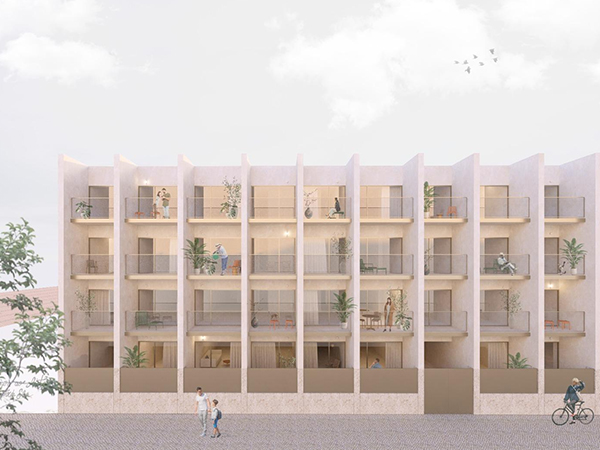
Riverscape in Almada is one example of how a well-chosen location can bring together strong design and genuine demand for high end properties outside of Lisbon. In Moita, a development is already in preparation, because our conviction in the area's fundamentals has only grown stronger the closer we have looked.
Why the Timing Matters
Real estate rewards those who anticipate these structural changes.
Land prices in many of these municipalities remain reasonable when assessed against future residential values. Planning frameworks are becoming more supportive of new housing supply. Infrastructure is improving steadily. And the price gap between Lisbon and its surrounding cities still gives buyers a meaningful value proposition that has not yet been fully priced in.
Five years ago, when central Lisbon was still the dominant focus of attention, the reasoning for looking outward was straightforward. Central pricing was approaching maturity. Land scarcity would limit future supply. Connectivity and infrastructure in the metropolitan area were improving. Lifestyle preferences were shifting toward space, accessibility and balance. Each of those factors has only become more pronounced since.
For developers, the metropolitan area now offers healthier margins and more scalable projects than the city centre can support. For investors, it means entering at more accessible levels with genuine appreciation potential as these areas consolidate and mature.
Investment Strategy: Looking Beyond the City Centre
For investors considering Portuguese real estate, the opportunity is not to abandon Lisbon but to broaden the frame.
Investing in municipalities like Montijo, Almada, Barreiro, Seixal or Moito offers exposure to:
● Strong residential demand from local and international buyers.
● Competitive acquisition prices compared to central Lisbon.
● Attractive rental yields relative to entry cost.
● Long-term appreciation potential as infrastructure and services expand.
● Lifestyle-driven demand anchored in proximity to beaches, green areas and urban amenities.
The diversity of that demand base is what gives these markets their stability. A location drawing retirees, young families, remote workers and long-term renters simultaneously is a location with real absorption capacity.
Maven's Perspective
At Maven, our role is to identify structural trends early, develop real estate projects with discipline and rigor, and guide investors through decisions that hold up over time.
We have watched the rise of Lisbon's metropolitan municipalities firsthand, supported land acquisition, project design, licensing and commercialisation across multiple locations, and we continue to prioritise these areas in our development pipeline. The shift from central Lisbon to the broader metropolitan area is, in our view, a long-term rebalancing of the region's urban geography rather than a temporary response to price inflation in the centre.
Portugal continues to attract international residents and domestic demand remains strong. The need for well-planned, modern housing will only grow. Much of that supply will be delivered outside the historic core.
For those looking to follow Portugal's real estate market more closely, the Portugal Investor Newsletter covers opportunities and developments across the country on a bimonthly basis. To explore specific opportunities or discuss your investment strategy, reach out to the Maven team at community@maveninvest.pt.






 English
 Nederlands
 Deutsch
 Français
 Español
 Italiano
 Svenska
 Pусский
 中文
中文 Türkçe
 Português
 Polski
 عربي
عربي Suomi
Suomi עִברִית
 Português (Brasil)
Follow us on social media