

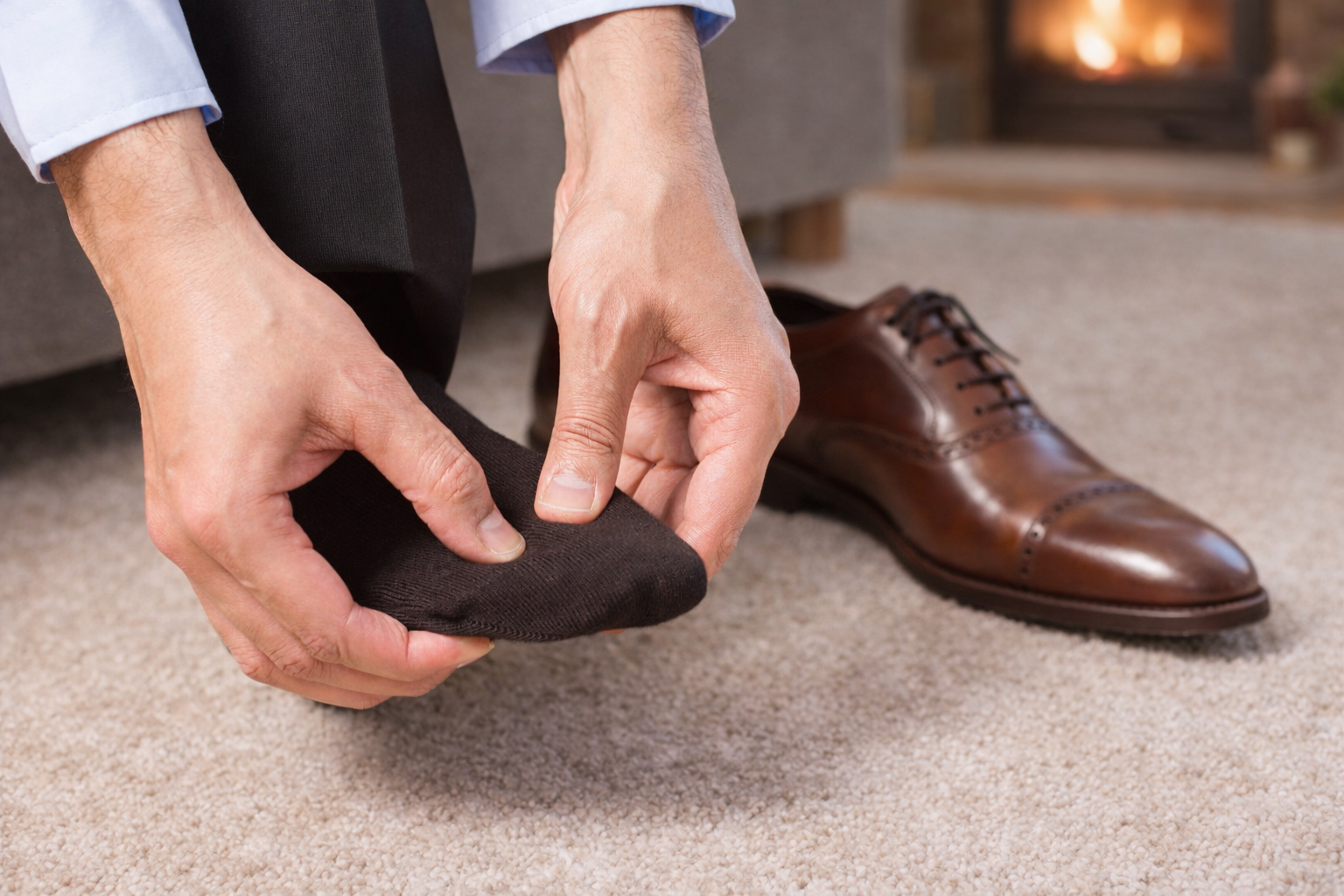
If you are already using insoles but still feel pain at the front of your foot, the problem may not be your orthotic.
It may be your shoe.
Following our recent discussion on metatarsal pain, discomfort in the ball of the foot, many readers asked a practical question: If I have support inside my shoe, why does it still hurt?
According to Gilbert & Lisson orthopaedic shoemaker Robert, the answer is often structural.
“People think compression is fine,” he explains. “They buy a shoe that looks good and assume they will get used to it. But when there is excessive compression around the toes, the foot cannot spread naturally with each step. That is when pressure builds up.”
The Problem with Compression
When you walk, your forefoot naturally widens to distribute weight across the metatarsals. Narrow, tapered or pointed shoes prevent this movement.
Instead of spreading, the toes are held tightly together. Over time this can contribute to metatarsal pain, Morton’s neuroma, joint irritation, arthritis in the big toe and bunions.
“The foot is being forced into a shape on every step,” Robert says. “That repeated compression creates pressure between the joints.”
In short, the shoe itself may be increasing the load on an already sensitive area.
When Firm Is Not Supportive
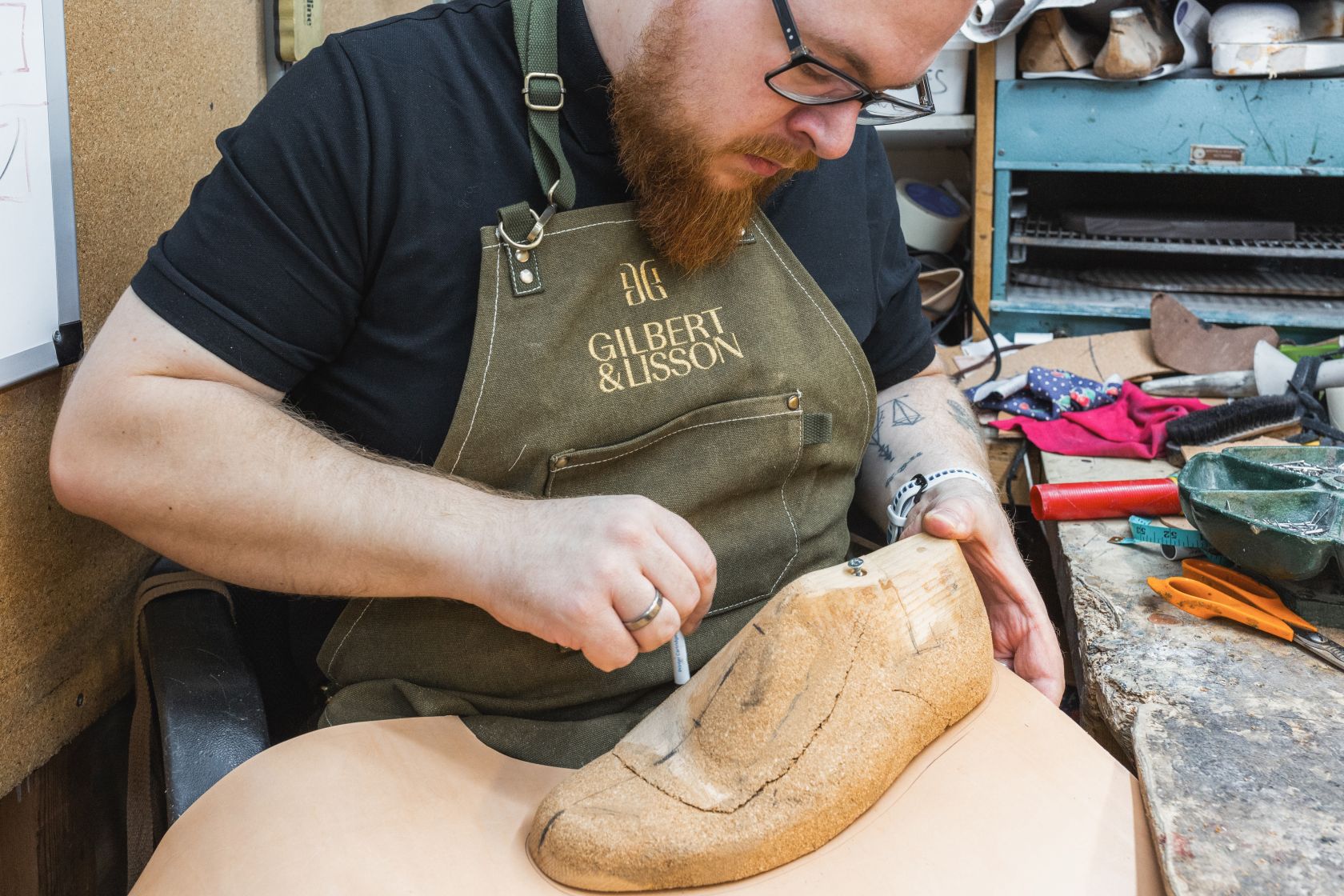
It may seem sensible to choose a very firm shoe for stability. But excessive rigidity can aggravate forefoot pain.
“If someone has a collapsed metatarsal area and the sole is too hard, it can irritate it even more,” Robert explains.
Upper materials matter too. Tight leather or non-stretch fabrics restrict natural movement. When the foot cannot adapt during walking, pressure concentrates in one area.
The result is more discomfort, even with orthotics.
The Role of Sole Design
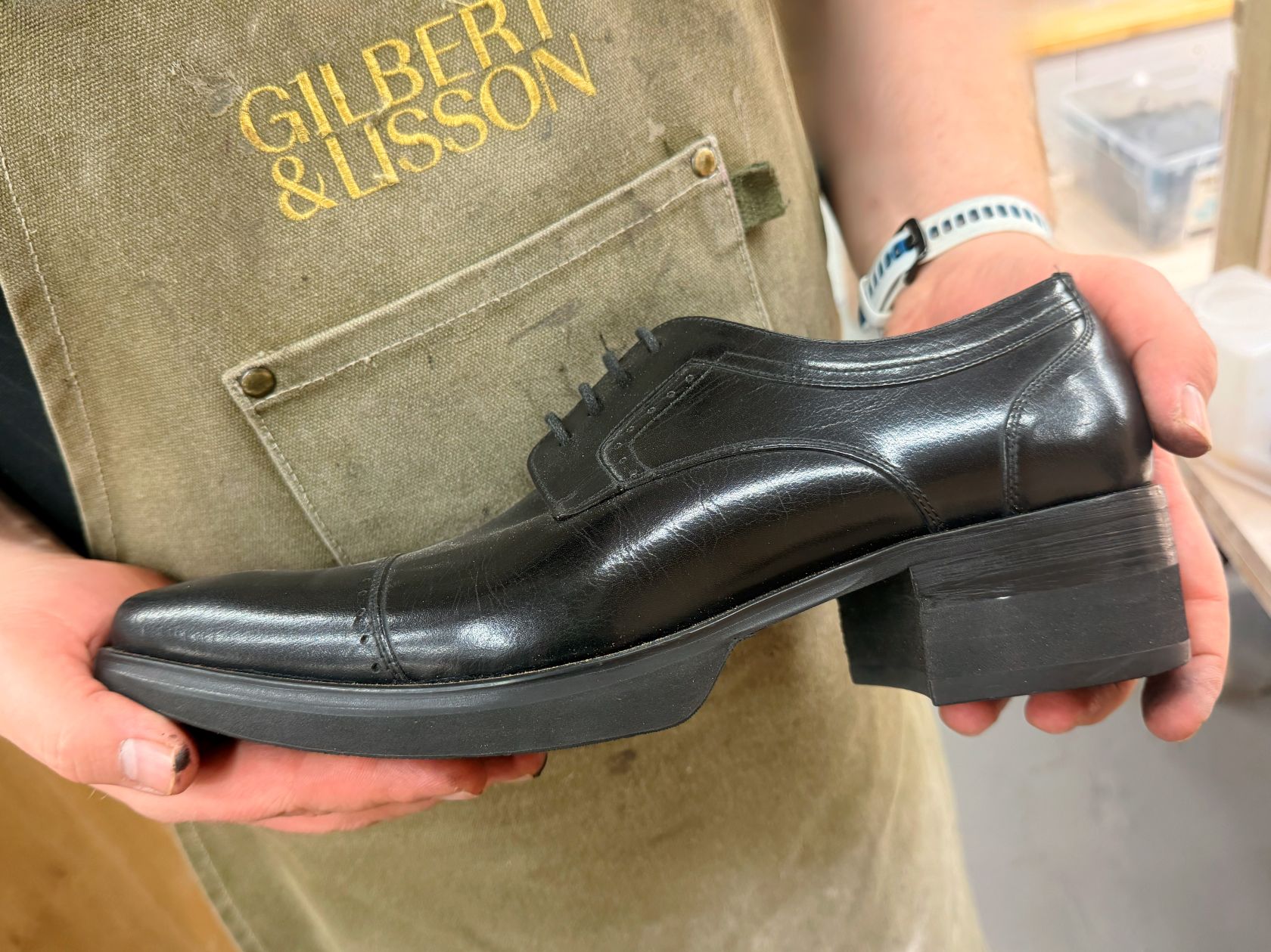
Sole shape is often overlooked. A gently curved rocker sole allows you to roll forward rather than bend excessively through the painful forefoot joints.
If those joints are inflamed or arthritic, reducing the bending motion can significantly ease strain. Instead of forcing the toes to flex under load, the sole assists the movement.
Why Orthotics Alone Sometimes Fail
Orthotics redistribute pressure and support arches. But they must work with the shoe.
“Every shoe has limitations,” Robert says. “A running shoe is designed for running. A smart dress shoe looks elegant but often offers very little space or shock absorption.”
Many off the shelf shoes simply do not provide enough depth for proper toe spread or a precisely positioned metatarsal support.
Sizing up can create friction and instability. Staying true to size may increase compression.
This is where bespoke footwear becomes important. Width, depth and structure can be tailored precisely, allowing the orthotic and the shoe to function together.
When Pain Persists, It’s Time to Look Deeper
Forefoot pain rarely has a single cause. It is usually a combination of arch collapse, thinning fat pad, compression and footwear design.
Treating only one factor may bring temporary relief, but lasting improvement requires addressing both internal support and external structure.
If you continue to experience pain at the front of your foot, even with insoles, it may be time to reassess your footwear.
A thorough consultation should examine gait, pressure distribution and how your shoes interact with your orthotics.
Because sometimes the answer is not more cushioning. It is better structure.
Treating forefoot pain effectively requires looking at both internal support and external structure. If discomfort persists, a comprehensive biomechanical assessment can identify what is being missed.
At Gilbert & Lisson, orthotics and footwear are designed together to restore balance and long-term comfort, with consultations available in London and during selected international visits.
Medical Orthotic Consultations Now in the Algarve
Following our successful initial visit in 2025, we are returning to Portugal to provide our full orthotic and footwear consultation service to residents of the Algarve.
Date: 9th-12th March 2026
Venue: Top suite, Hotel Quinta Jacintina, 8135-025 Almancil, Portugal
Your complimentary consultation will include:
● Biomechanical and electronic gait analysis
● A personalised footwear and orthotic consultation
● Review of medical or foot concerns such as bunions, dropped arches, hammer toes, fused bones, diabetic ulcers or imbalance
● Options for bespoke shoes, orthotic insoles and long-term support
With consultations taking place in just a few weeks, remaining appointments are limited. Early booking is strongly recommended - Click to book today!
For more information, please contact Gilbert & Lisson at +44 20 7486 4664 or info@gilbertandlisson.com.
Our address: 12 New Cavendish Street, London, W1G 8UN, United Kingdom






 English
 Nederlands
 Deutsch
 Français
 Español
 Italiano
 Svenska
 Pусский
 中文
中文 Türkçe
 Português
 Polski
 عربي
عربي Suomi
Suomi עִברִית
 Português (Brasil)