

For a whole generation in Britain, it wasn’t simply a method of transmission; it was television itself. The soft flickering glow and the faint smell of hot dust and warm bakelite alongside the unmistakable image texture that modern screens could never emulate, all belonged to the 405-line era. It was here long before channel-hopping made attention spans evaporate. It was a simpler, statelier form of broadcasting that shaped the national consciousness.
The story begins in the 1930s, when the BBC launched the world’s first regular high-definition TV service from Alexandra Palace. High-definition, in this context, meant 405 lines which was quite an astonishing leap at a time when 120 or 180 lines were common elsewhere. Compared to the flickering experiments of the era, 405 (VHF) seemed cutting-edge. And then, after the war, it became the backbone of British television for over three decades. It was the system that delivered the coronation of Queen Elizabeth II, the post-war optimism of the 1950s, the kitchen-sink dramas of the ’60s, and the golden age of British comedy.
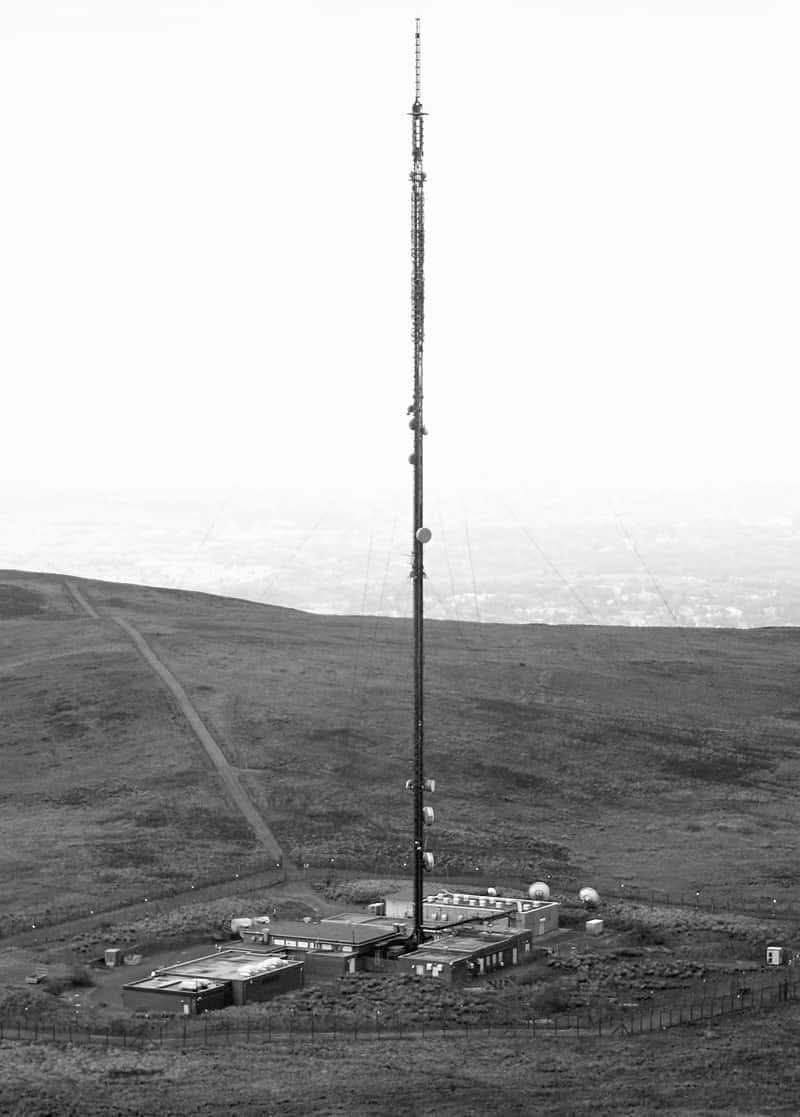
To modern eyes, the technology appears rudimentary. 405 lines of resolution provided black and white images only, whilst the frequency band was vulnerable to all manner of interference. Everything from passing taxi radios to atmospheric quirks drifting in from Ireland in the west and from the near continent in the east. But this was the system that allowed the first mass adoption of TV. Sets were expensive but suddenly just about affordable enough for working families. And with only two channels, BBC and later ITV, viewing was a communal act. Entire neighbourhoods would gather in front rooms on winter evenings to watch “Sunday Night at the London Palladium” or the “Billy Cotton Band Show,” flickering away on screens barely larger than a dinner plate.
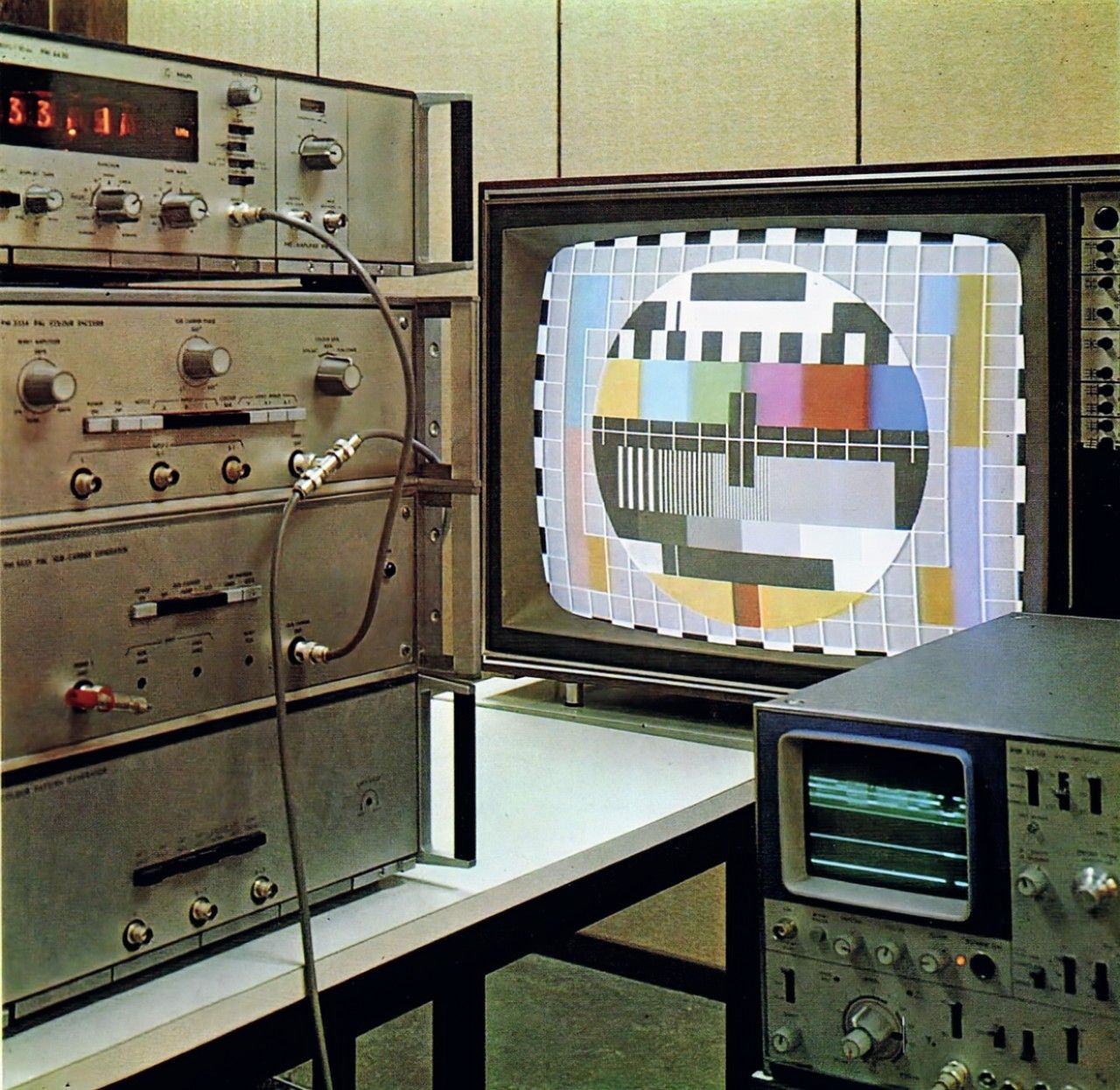
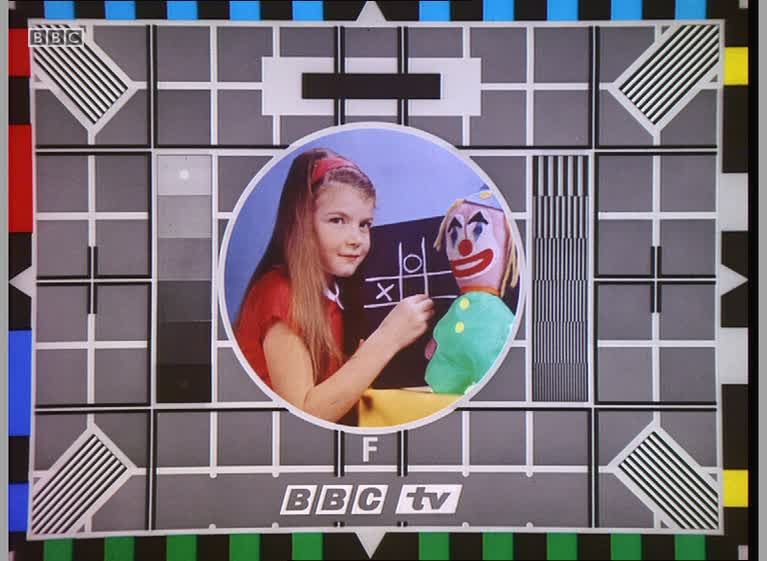
What 405-line lacked in fidelity, it made up for in character. Part of the charm came from the VHF broadcasts themselves. VHF travelled far, particularly at night, and DX-ers (early TV hobbyists) recall picking up ghostly French or Dutch images drifting over the airwaves during certain weather conditions. Ireland’s RTE broadcasts were easily picked up in Wales: so much so that RTE tv listings were published in North Wales’ local newspapers. 405 brought us the iconic test cards, especially the Philips test card PM5544 and the familiar test card F featuring the girl and clown during lengthy off-air hours. And if you were especially unlucky, the sight of a potter’s wheel, accompanied by soft classical music, indicated that something had broken in the gallery and the BBC needed a moment to collect itself.
One of the often-forgotten aspects of the 405-line era is how stable the image looked compared to early colour transmissions. Black and white CRTs were forgiving things. Because of the lower line count and slower scanning speed, 405 had a certain warmth, a glow that today we might ironically associate more with nostalgia filters on social media. The lines were visible, yes, but they gave the picture a softness that razor-sharp modern screens lack. Modern displays chase precision; 405 offered atmosphere.
The sets themselves were iconic. Heavy wooden cabinets, glowing valves with louvered back panels featuring warnings of lethal voltages. Switching on a TV in the 1950s or ’60s wasn’t an instant affair. The valves needed to warm up. The picture needed to stabilise. The cathode ray tube needed to build charge. There was a familiar high-pitched whine was the sound of anticipation. Kids would sit inches from the screen, transfixed, while adults muttered about closed proximity TV viewing damaging their eyes. And then the picture would gradually form until the scene came alive.
And what scenes they were. The 405-line system delivered some of the most culturally important broadcasts in British history. The 1953 Coronation, watched by an estimated 20 million people in Britain, was seen on 405-line sets. The broadcast wasn’t perfect because lighting was tricky, the cameras were temperamental and the weather was appalling. Yet it marked a turning point. Television became an essential household item, not a curiosity for the wealthy.
The rise of ITV in 1955 turbocharged this transformation. Suddenly, competition arrived, bringing with it commercial breaks, American imports, whilst regional programming heralded an explosion in viewing figures. Shows like “Sunday Night at the London Palladium,” “Emergency Ward 10,” “The Army Game,” and “Coronation Street” became must-watch TV. All of this, every laugh, every drama, every grainy image was carried by the humble 405-line system.
Technically speaking, 405 had limitations. Broadcasters dreamed of higher line counts and widescreen visions of the future. By the 1960s, these dreams began to materialise as the UK introduced the 625-line (UHF) system, capable of supporting colour via PAL encoding. Suddenly, 405 looked old. Even in black and white, the difference between 405 and 625 was immediately noticeable. The picture was clearer, sharper and more stable.
But despite its growing obsolescence, 405 refused to vanish overnight. Millions still relied on it through the 1960s and into the 1970s. Manufacturers continued to produce dual-standard sets that could switch between 405 and 625 at the twist of a knob. Some viewers stuck with 405 simply because they preferred it. Others because they saw no need to upgrade. And in many rural areas, UHF coverage lagged, making 405 the only option.
The final blow came in the 1980’s. As transmitters were gradually converted or closed, the 405-line service began its long fade into history. The last regular transmissions were switched off on the 3rd of January 1985, when the Channel 4 relay at the Crystal Palace transmitter ceased 405 broadcasting. It was an understated end to a system that had served nearly half a century.
Yet, even decades later, the affection for 405 endures. Vintage TV collectors treasure old dual-standard sets. Engineers reminisce about the simplicity and elegance of early broadcast systems. Archivists preserve 405-line recordings, not because they are technically superior but because they offer a window into the birth of modern television. The imperfections, the analogue textures and the occasional bout of picture instability are all part of the charm.
There is also something deeply human about 405-line TV. It belonged to an era when broadcasting was less polished, less frantic and more communal. Families watched together because there was only one screen and very little choice. When something big happened such as the moon landings, royal events or cup finals; the whole nation experienced it simultaneously.
Today, in an age of super-high-definition screens and endless content, 405-line VHF TV feels like a relic from a gentler time. And perhaps that’s why its memory remains so vivid. It represents the moment when technology first connected an entire nation, not with perfection but with warmth,character, charm and dignity.
The glory days of 405-line VHF television are long gone, but they left a legacy that modern broadcasting still builds upon. It was the foundation of everything that came afterwards. Proof that a simple signal, carried across the grey, smoggy skies of Britain on VHF frequencies could captivate millions and change our society forever.








 English
 Nederlands
 Deutsch
 Français
 Español
 Italiano
 Svenska
 Pусский
 中文
中文 Türkçe
 Português
 Polski
 عربي
عربي Suomi
Suomi עִברִית
 Português (Brasil)