

Since December 2025, the price of Tungsten as a strategic war metal has leaped on world markets by an astonishing 550% due almost entirely to requirements for weaponry intended for the use of USA and NATO in the conflict zones of Ukraine and Iran.
The Panasqueira mine in Beira Interior is one of the few worldwide which is not under Chinese control. It has been in production of tin and wolfram (as the metal was once known) for more than a century and became famous in World War II because of the export authorised by the Salazar regime to Nazi Germany where it was essential for building Panzer tanks and other war machinery. The controversy included questioning the source of payment in gold ingots stamped with the swastika which are said to be held in the vaults of the Bank of Portugal.
After the war, the metal gradually fell in price until the U.S. invasions of Iraq and Afghanistan renewed demand despite the synthesis of new materials and alloys to replace armour plating. The mine is now owned by the Canadian Almonty Industries which will benefit substantially from an operating profit now estimated at US$ 130 million for 2026.
Copper remains the backbone of the Portuguese mining industry. With zinc, total annual revenue is between US$1.4 and 1.8 billion with a net profit value of US$ 500 to 700 million. Production is centred on the Neves Corvo mine in the lower Alentejo which is managed by Somincor but owned by the Swedish group Boliden. With diverse sales to the telecommunications industry, constructors of data centre buildings and the military, there is a marketing stability which generates a steady cash-flow. Values rose steadily during 2025 and are expected to gain around 12% this year.
In the Pyrites belt which extends into Spain there are numerous smaller mines. Some of these are now being resuscitated with the installation of modern equipment to exploit the wealth which is estimated to exist at various levels below ground. Obviously Spanish investors predominate but the U.S., China and the Middle East are competing for the licences which are now so attractive both for long term investment and ensuring availability in the supply chain.
The only mine of significance to remain in Portuguese hands is that of Aljustral where lead, zinc and copper are produced.
For the long-delayed Lithium projects in the north of our country, it is likely that full production will commence in early 2028. At the controversial site Barroso, recent exploration has increased potential to 39 million tonnes of ore which would sell presently at US$20,000 per tonne making it the largest and most valuable hard-rock lithium deposit in Europe. The ownership is registered in the U.K. to Savannah Resources but the nationality of major shareholders remains obscure with many changes of management having been made over recent years.
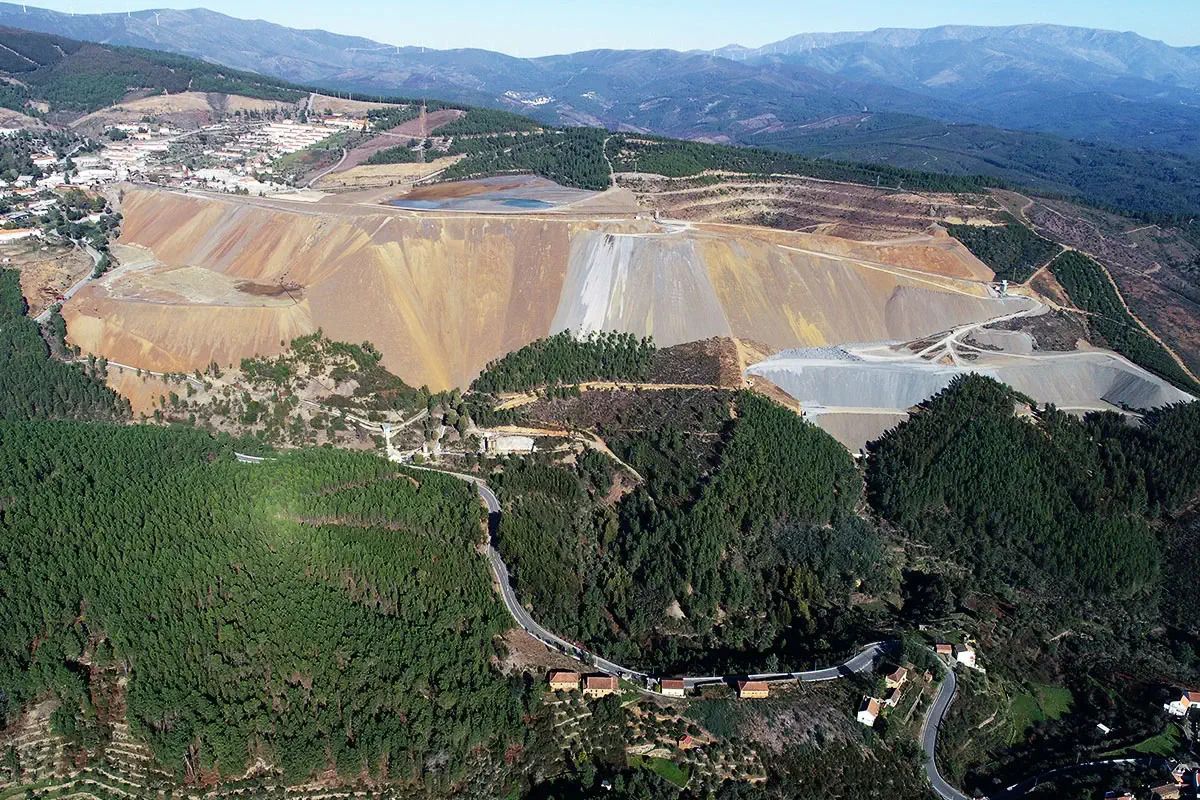
There are at least eight other sites in the north which have been explored and are now being evaluated before investment/planning approval can result in the terms of licences being decided and approved by Brussels. True identities of the applicant companies are not always clear but Australians and North Americans are thought to predominate.
Refining of lithium is expected to be undertaken by a Chinese owned factory at the industrialised zone of Sines for direct shipment to overseas customers. For the car manufacturers and other customers located in the EU, the rail links already in service for moving lower grade lithium to factories for ceramics may be useful.
The protest movements in the north which have gained so much publicity are aware that it is only a matter of being heard at a few more tribunals before the overwhelming strength of the EU and wealthy corporations will succeed. However, their determined efforts should be rewarded by concessions from Savannah and their fellow exploiters concerning a more careful zoning of open-cast working, increased environmental protection, higher values being paid for land and homes expropriated and, most important, a profit sharing scheme.
From a commercial viewpoint, this combination of tungsten, copper and lithium will make Portugal a foremost producer in global terms but such industrialisation comes at a price. The traditional culture enjoyed by countryfolk must be respected and, hopefully, they will gain some benefit from increased wages in exchange for the desecration of vast swathes of agricultural land and the consequent loss of income from tourism.
Note. Parts 2,3 and 4 of my essay “The exploitation of Portugal´s mineral resources” were published in TPN during February and March 2024 and readers may find content to be relevant.
An essay by Roberto Cavaleiro. Tomar. 27 March 2026






 English
 Nederlands
 Deutsch
 Français
 Español
 Italiano
 Svenska
 Pусский
 中文
中文 Türkçe
 Português
 Polski
 عربي
عربي Suomi
Suomi עִברִית
 Português (Brasil)
Note: national production of tungsten for 2025 has just been announced for the Parasqueira mine as being 560 tonnes. Expansion is to be anabled by opening level 4 and is expected to reach 1,200 tonnes by 2027. Mines in Spain and Austria produced 800 and 840 tonnes respectively. The production in China dwarfed the rest of the world by reaching 67,000 tonnes with known reserves amounting to 2.5 million.
By Cavaleiro R. from Other on 01 Apr 2026, 08:49