


Good, bad or indifferent?
There are a few places on Earth where you can eat a slightly stale ice cream, step in something unspeakable and lock eyes with a creature that could, in the wild, remove your head.
Zoological Gardens are, admittedly, curious institutions. Half theme park, half conservation bunker and entirely capable of igniting the sort of ideological fistfight usually reserved for politics, religion and whether pineapple belongs on pizza.
Frankly, I’m not too sure where I stand on this subject. Over the years, I have visited plenty of different ones. So I will begin with what strikes me as the obvious. Zoos are, at their core, prisons. People can dress it up however they like with terms like “enclosures,” “habitats”, and “behavioural enrichment programmes”, but the fact remains that those lions aren’t roaming the Serengeti. Instead, that huge male is pacing, rather moodily, in a carefully landscaped paddock while a toddler pelts him with a rice cake. It is, if we’re being brutally honest, quite probably not the life nature had in mind for him.
And yet, before we all don our hemp shirts and march off to liberate the meerkats, it’s worth considering what zoos actually do beyond providing interesting backdrops for family selfies. Because modern zoos are not the Dickensian menageries of yesteryear, where a depressed bear sat in a concrete pit looking decidedly bedraggled. No. Today’s reputable zoos are deeply entangled in global conservation efforts. And this is where things get quite interesting.
Institutional collaboration
Zoos talk to each other, constantly. There is a highly organised, scientifically rigorous exchange of data, animals, and genetic material. There are international breeding programmes which essentially work like Tinder for endangered species. Institutions collaborate to ensure that captive populations remain genetically diverse. Because if you don’t manage this aspect properly, you end up with a Chimpanzee that looks less like a Chimp and more like your old Uncle Bill.
Take, for example, species teetering on the brink of extinction in the wild. Zoos maintain what are known as “assurance populations”. Backup copies, if you like. If a species collapses in its natural habitat due to poaching, habitat destruction or the latest human-inspired catastrophe, there is at least a fighting chance it can be reintroduced. This has already happened with several species, from birds to mammals, that have been bred in captivity and released back into the wild. Admittedly, with varying degrees of success.
Of course, this all sounds terribly noble, and in many cases it genuinely is. But it doesn’t entirely erase the annoying little factoid that the animals themselves didn’t exactly volunteer for these programmes. The conservation argument is a bit like someone saying to you or I that we’ve been put in a gilded cage for the greater good of our species. Hmmm? Dare I say, I’d be quite nervous about the Tinder bit. What if I ended up on the breeding programme and was introduced to a mate called Anne Widdicombe? I’m quite sure that poor Anne would be equally horrified.
Animal welfare
Despite all the flimflam, for many people, zoos are fundamentally unethical. Their argument goes something like this. Animals have an intrinsic right to freedom. No amount of conservation spin can justify confining them for human benefit, be it education, research or entertainment. In this view, a zoo is not a sanctuary but a compromise. A morally dubious one at that.
There’s also the question of animal welfare. Even in the best zoos, replicating the complexity of a natural habitat is extraordinarily difficult and therefore very expensive. An elephant, for instance, might roam dozens of miles a day in the wild, navigating intricate social structures and environmental challenges. In captivity, even with acres of space and enrichment activities, that level of stimulation is impossible to match. Critics argue that this leads to stress, abnormal behaviours and a life that is, at best, a pale imitation of living naturally.
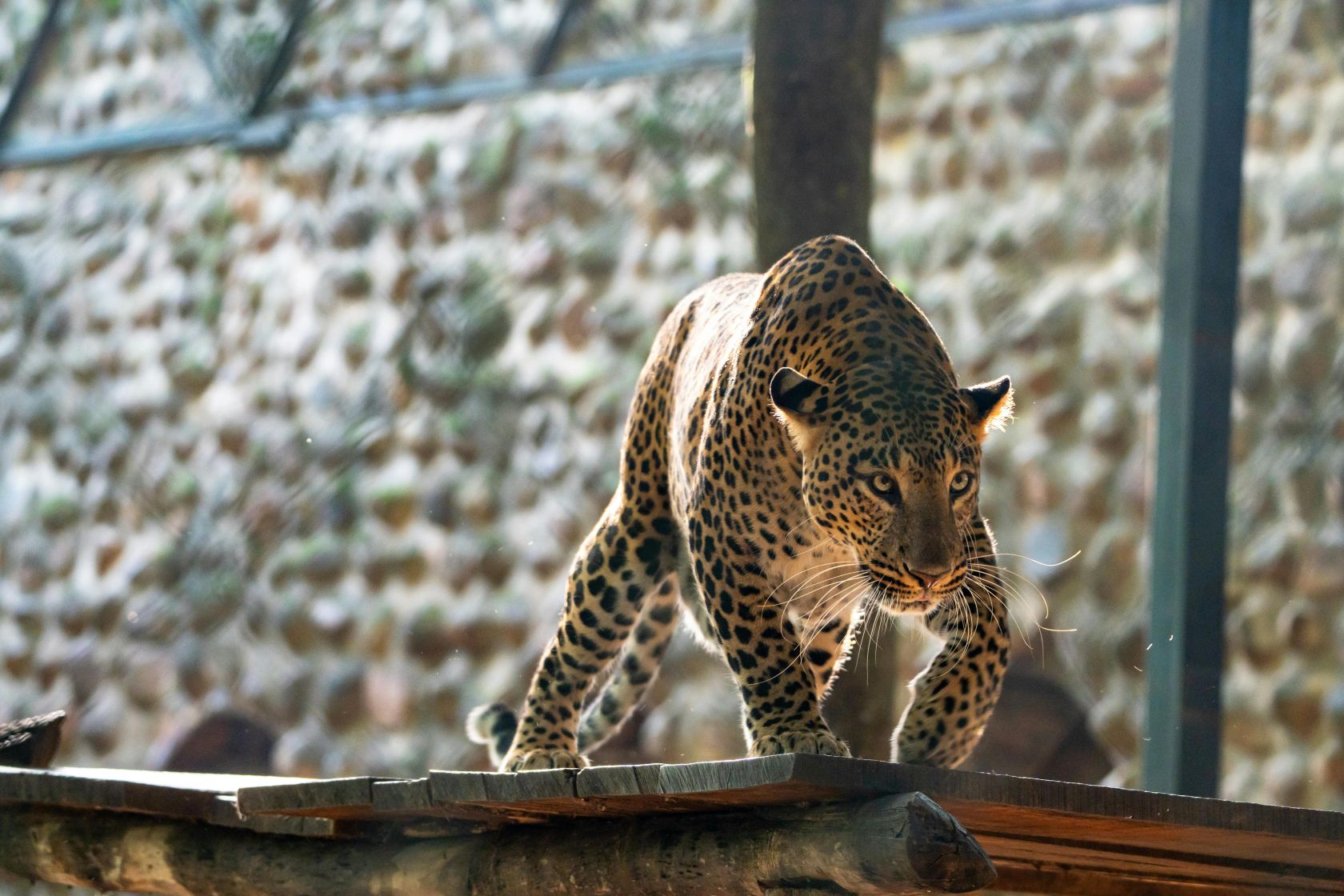
Fair points, all of them. But, and it’s a rather large but: What’s the alternative? It’s all very well for people to shout about shutting down zoos and setting the animals free. Unless such individuals, however well-meaning, have been living under a rock, the natural world isn’t exactly thriving these days. Just look at how habitats are being destroyed at an alarming rate, whilst poaching continues, and climatic factors are rearranging fragile ecosystems. So, releasing captive animals into such chaos without careful planning wouldn’t be liberation, it would be a death sentence.
Wildlife reserves
Some critics advocate for wildlife reserves and protected areas as the solution. And they’re absolutely right, these are vital. Large, well-managed reserves can provide animals with space and relative freedom while still offering protection from various threats. But creating and maintaining such areas requires vast amounts of land, money and political will. Sadly, all of the above are in depressingly short supply. And even then, reserves are seldom immune to the pressures of the modern world.
What about a shift towards sanctuaries? Places where animals are not bred or displayed for entertainment but simply allowed to live out their lives in peace. Again, a commendable idea and one that works well for certain species, particularly those rescued from dire circumstances. But sanctuaries don’t typically engage in the same level of coordinated breeding and conservation work as zoos. They are, by design, more about care than long-term species survival.
There’s the educational argument, which is often wheeled out with a slightly smug air. Zoos, we are told, inspire people to care about wildlife. A child who sees a giraffe up close is more likely to grow up to value conservation. It’s a nice thought and, from experience with my own kids, there’s some truth to it. Seeing an animal in the flesh is undeniably more impactful than watching it on a screen. But I really don’t have any evidence that my granddaughter’s liking to draw giraffes helps the species in real-world terms.
In an age of breathtaking documentaries and virtual reality, one might reasonably ask whether physical proximity is still necessary. Do we really need to confine a tiger to teach someone that tigers are magnificent and worth saving? Or can Sir David Attenborough do the job just as well when you are looking on from the comfort of your sofa?
A compromise
In the end, the zoo debate is less about animals and more about us. It’s about how humanity balances the desire to protect the natural world with our tendency to harm it. It’s about whether the ends (species preservation) justify the means (captivity). It’s about acknowledging that. The choices we’re faced with are not between good and bad, but between bad and worse.
Zoos, at their best, are not perfect. They are compromises. They are places where science, ethics and practicality collide in a sort of uneasy truce. They do important work, often in the background and without much fanfare, preventing the irreversible loss of species. But they also raise legitimate moral questions that shouldn’t be dismissed with a wave of the hand and a selection of overpriced ice cream.
So the next time you find yourself staring at a lion who looks a tad unimpressed with your existence, consider this. That lion is both an ambassador for his kind as well as a prisoner of our making. The truth is. In a world we’ve made increasingly inhospitable for wildlife, that lion might also be one of the lucky ones. Especially if he meets a lioness called Anne.








 English
 Nederlands
 Deutsch
 Français
 Español
 Italiano
 Svenska
 Pусский
 中文
中文 Türkçe
 Português
 Polski
 عربي
عربي Suomi
Suomi עִברִית
 Português (Brasil)
I'd rather not spend a day in Martin Moniz
By Oliver from Porto on 25 May 2026, 10:39