

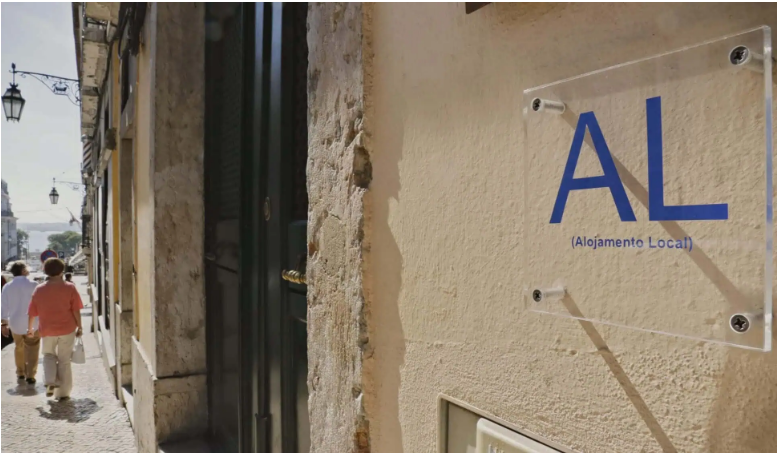
The process, which began late last year, targets local accommodation units that have failed to meet regulatory requirements, including the submission of mandatory liability insurance documentation.
Lisbon was the first municipality to carry out the review, cancelling 6,765 registrations from a total of around 19,000 local accommodation units recorded in the capital. The closures represent roughly 40% of the city’s registered short-term rental properties.
Other municipalities, including Porto, Lagoa and Lagos, have since completed similar reviews and removed inactive registrations from their records.
In Porto, authorities ordered the cancellation of 1,413 local accommodation licences, accounting for approximately 12% of the city’s registered units.
The changes are already being reflected in Portugal’s National Local Accommodation Register (RNAL), which currently lists 119,147 active local accommodation properties nationwide.
However, industry figures suggest further reductions may be on the way. According to the Local Accommodation Association of Portugal (ALEP), more than 37,000 registered properties have yet to provide proof of the compulsory insurance required to remain active.
The association estimates that as many as 30,000 additional registrations could eventually be removed if owners fail to comply with the rules.
Supporters of the review argue that the process will create a more accurate picture of Portugal’s active local accommodation market by removing so-called “ghost licences” linked to properties no longer operating.
The clean-up comes as local accommodation continues to play a significant role in Portugal’s tourism sector while remaining at the centre of ongoing debates around housing availability and short-term rental regulation in several cities.








 English
 Nederlands
 Deutsch
 Français
 Español
 Italiano
 Svenska
 Pусский
 中文
中文 Türkçe
 Português
 Polski
 عربي
عربي Suomi
Suomi עִברִית
 Português (Brasil)
Arbnb has turned the whole of portugal into a giant hotel room.
Nowhere is safe.Communities,cities,towns and neighbourhoods have been gutted.
One giant characterless theme park has been created
By James from Algarve on 13 Jun 2026, 06:25
The problem with AL is that it is totally indiscriminate. Residents invest and then end up spending time with people next door who have zero respect for anyone, other than who is in their vague social world for 2 weeks. AL may make some people wealthy, but generally the make the community poorer.
By Bruce from Lisbon on 14 Jun 2026, 08:03